SAN FRANCISCO
— WHERE IT STARTED
Paul Littlestripes’ journal
May 16–22, 2025
Before there were songs, there was a city.
MAY 16 — ARRIVAL
I landed in San Francisco on May 16.
At 1:23 p.m., local time, I was at the hotel. I dropped my bags, looked out of the window for a while and tried to convince my body that it wasn't supposed to be sleeping.
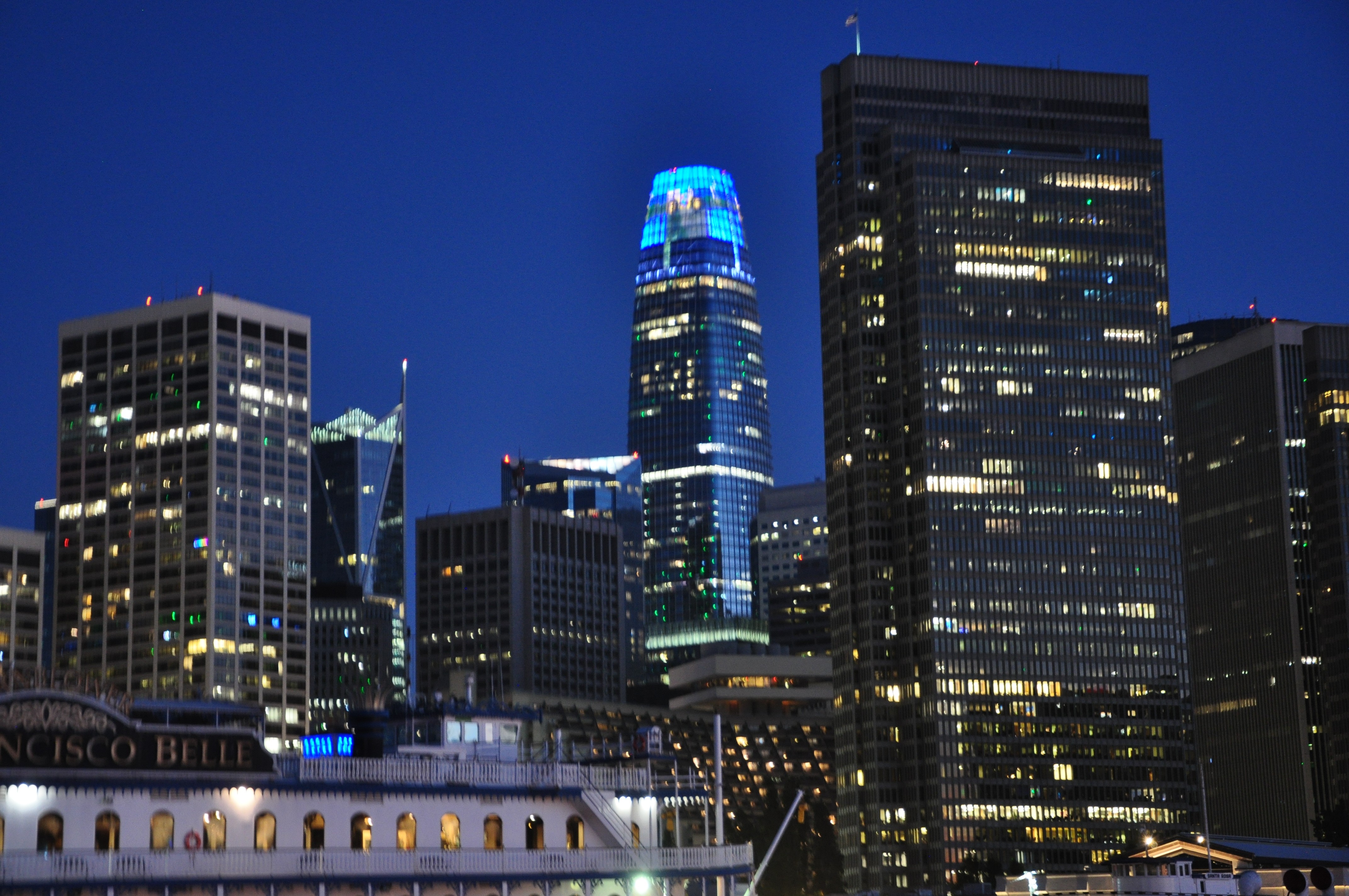
That evening I walked down toward the Embarcadero.
The Giants were playing, and the streets around the ballpark were full of people. Giants fans on one side, Oakland fans on the other. Nobody seemed particularly interested in starting a war over it.
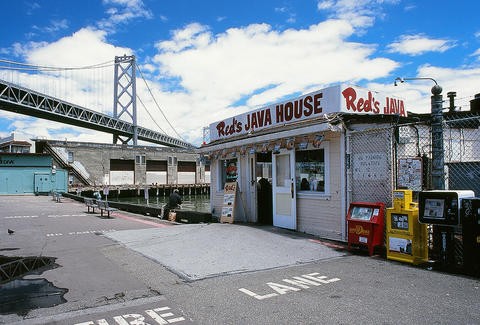
I stopped at Red’s Java House, got a hamburger and a Budweiser and watched the city go by.
It was my first night in San Francisco.
I didn't know it then, but something had already started.
MAY 17 — ACROSS THE BRIDGE
Breakfast was the full American disaster: eggs, potatoes, sausage, coffee and a croissant that had probably committed some crime against France.
Then I headed to Fisherman’s Wharf and rented an e-bike.
The plan was simple: ride across the Golden Gate Bridge and reach Sausalito.
Fort Mason. Marina Boulevard. Palace of Fine Arts. Crissy Field.
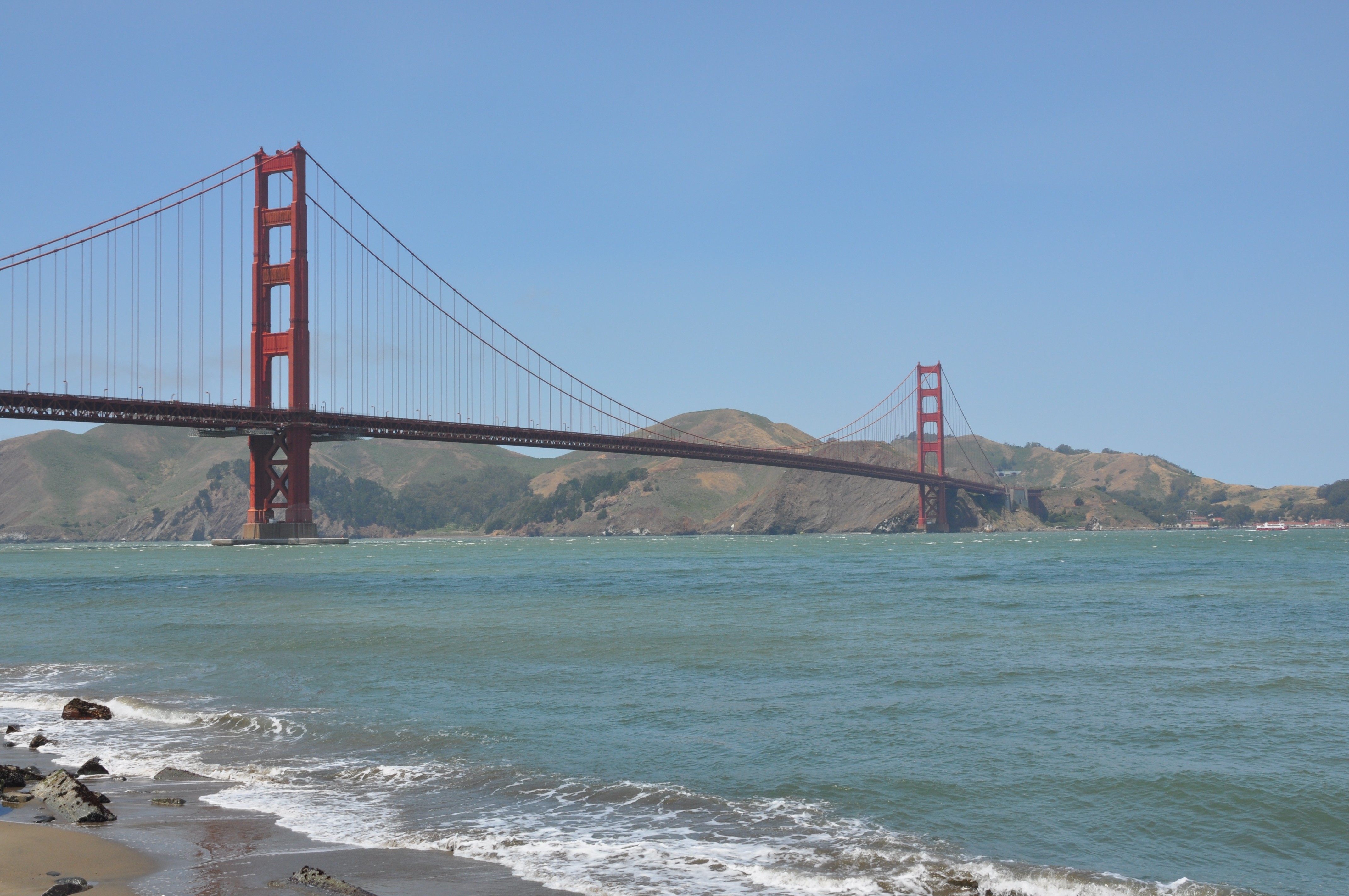
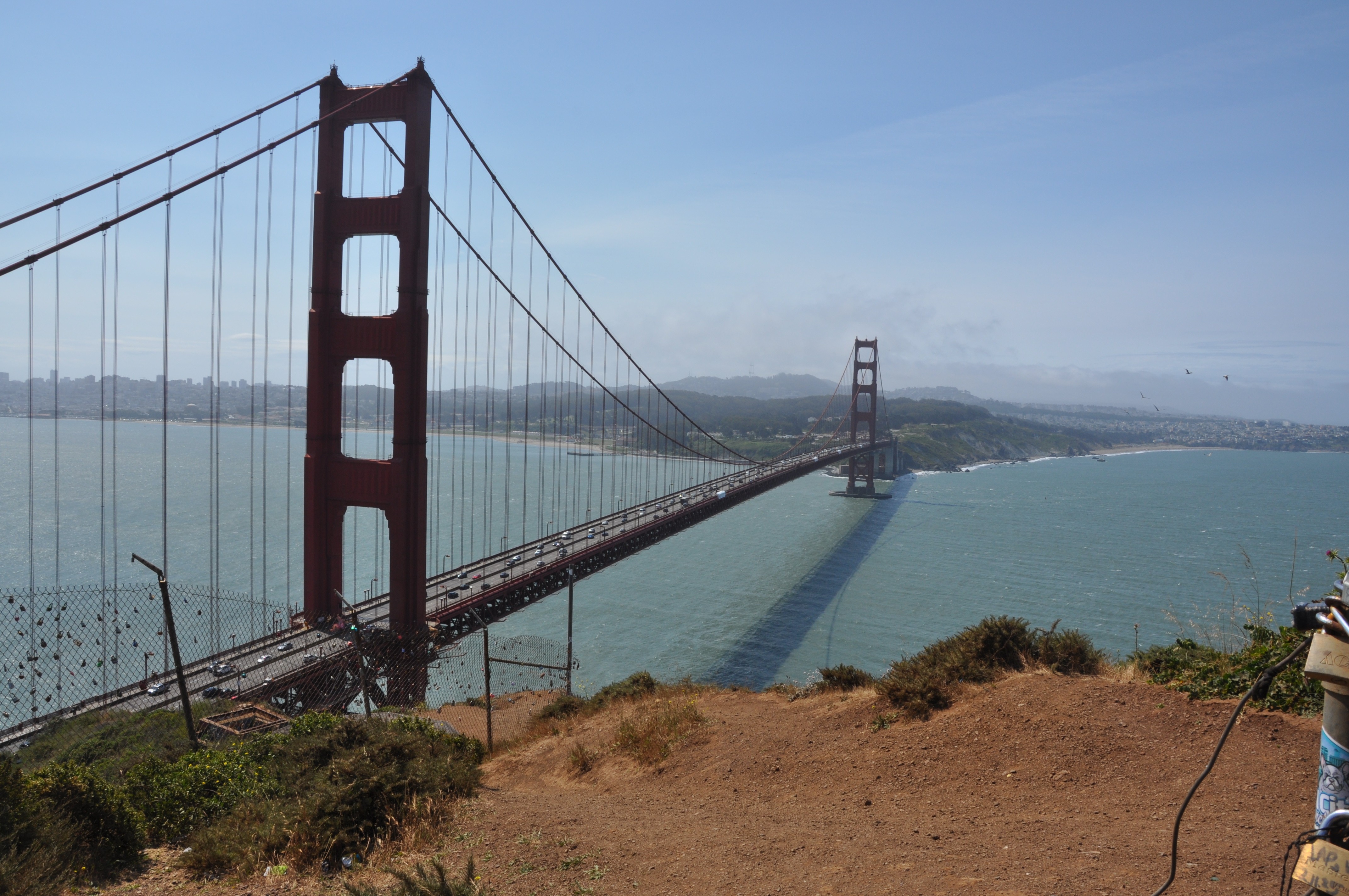
Then the bridge appeared.
Red, enormous, almost unreal.
I rode onto it with the wind coming hard from the Pacific and that strange continuous sound made by traffic, steel and air moving through the structure.
Halfway across, I stopped.
San Francisco was behind me, partly hidden in the haze. The ocean was on the other side.
I remember thinking that cities look different when you're leaving them.
Then, naturally, the rear tire went flat.
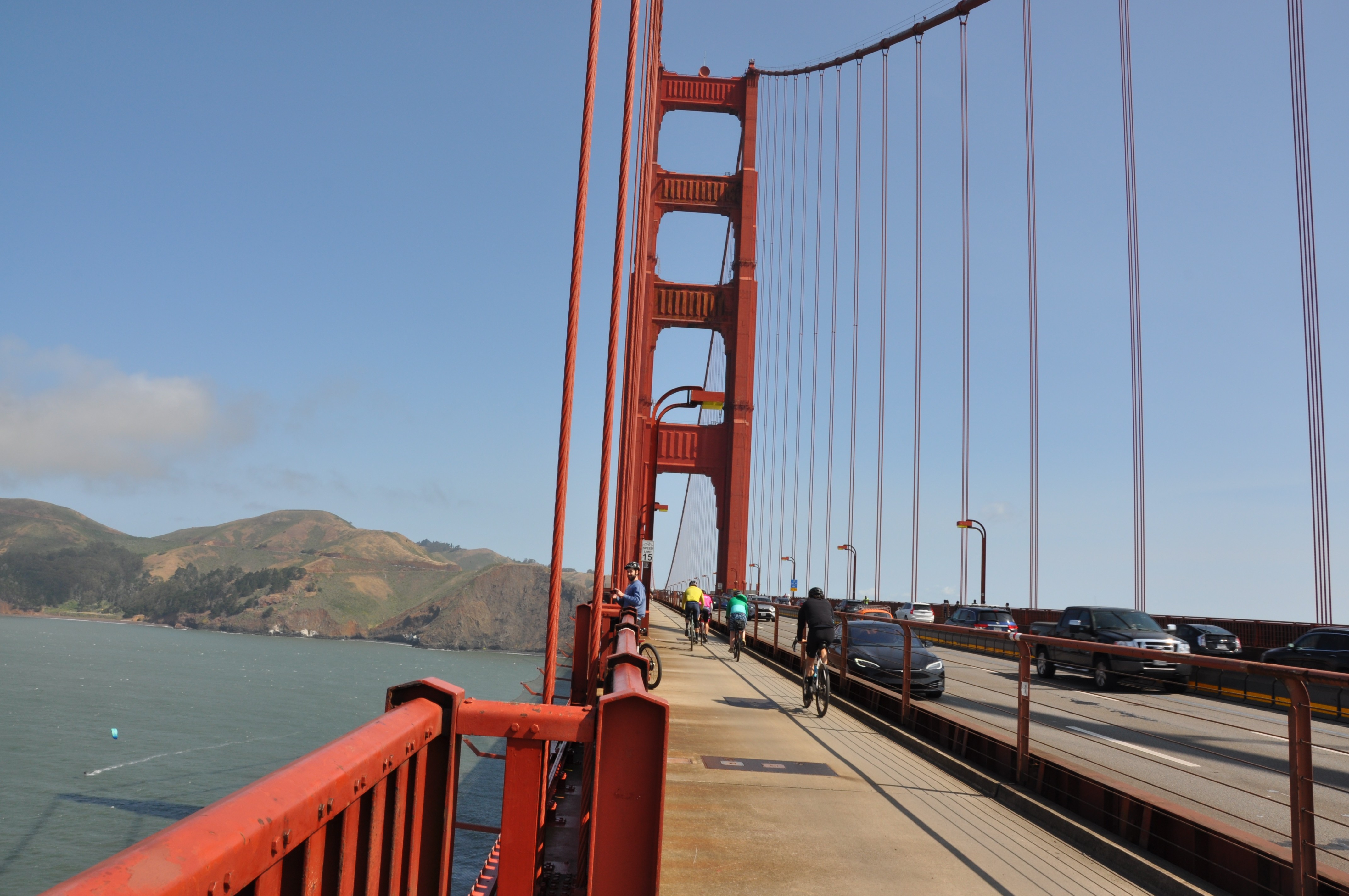
So much for transcendence.
After a few phone calls, a long walk and a bike shop that relieved me of fifty-three dollars, I eventually reached Sausalito.
That was where I first met Jimmy Ache.
Not in some legendary club. Not on a stage.
Outside a small rehearsal space behind a row of shops.
I heard an electric guitar coming through a half-open door and stopped.
It wasn't technically perfect.
That was exactly why I liked it.
There was something restless about the way he played. Long sustained notes, bends, bits of feedback deliberately left hanging in the air. Then a dry riff would suddenly cut through all that space.
It didn't sound polished.
It sounded alive.
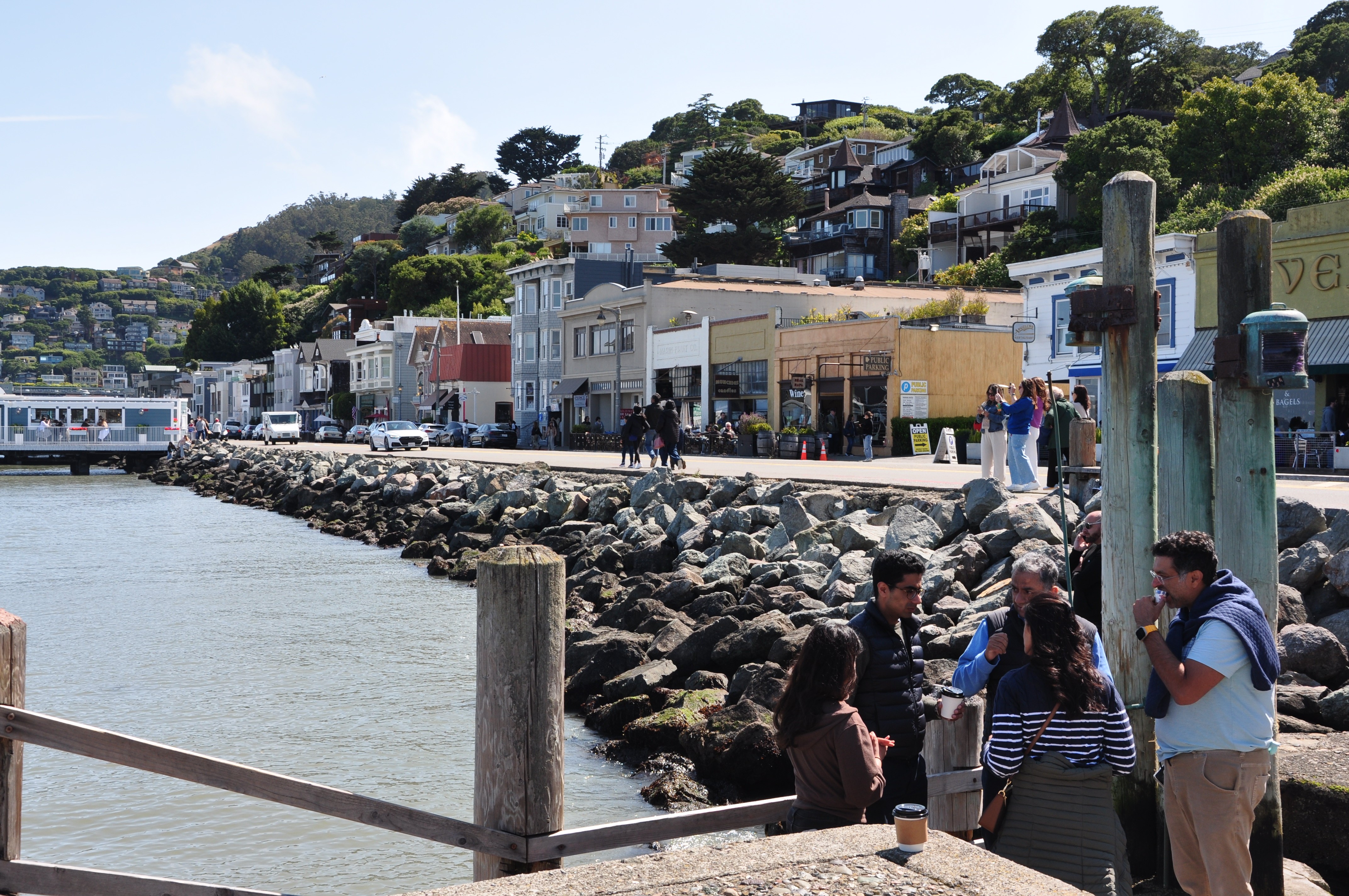
Jimmy came outside carrying a battered guitar case.
We talked for maybe fifteen minutes.
Old guitars. British records. American records. Why modern rock sometimes sounded too clean. Why a guitar shouldn't just decorate a song.
Jimmy said it should tell you something about the person playing it.
Then he shrugged.
“Songs need scars.”
I remembered that.
We exchanged numbers.
Nothing else happened.
I took the ferry back across the Bay.
At the time, Jimmy Ache was simply a guy I'd met in Sausalito.
MAY 18 — ALCATRAZ
Jet lag was still winning.
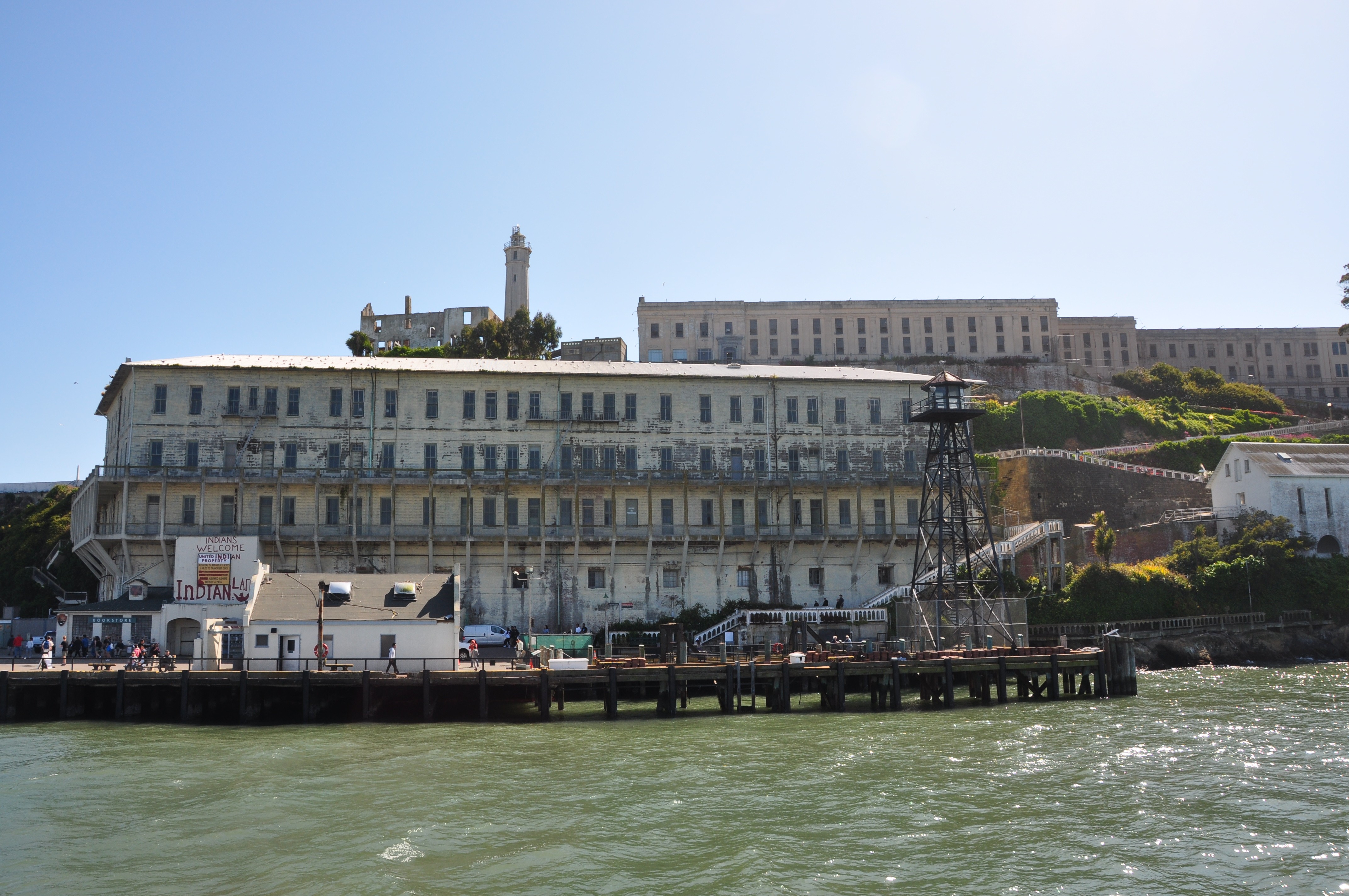
Later that morning I took the boat to Alcatraz.
The prison is smaller than you imagine. That's probably what makes it disturbing.
Everything is close: the cells, the corridors, the dining hall, the isolation block.
And outside, impossibly close, is San Francisco.
You can see freedom.
You just can't reach it.
I walked through D Block listening to stories of prisoners who spent years staring across the water toward a city they could see but couldn't touch.
Then I went out into the Recreation Yard.
Concrete walls, wind, cold air.
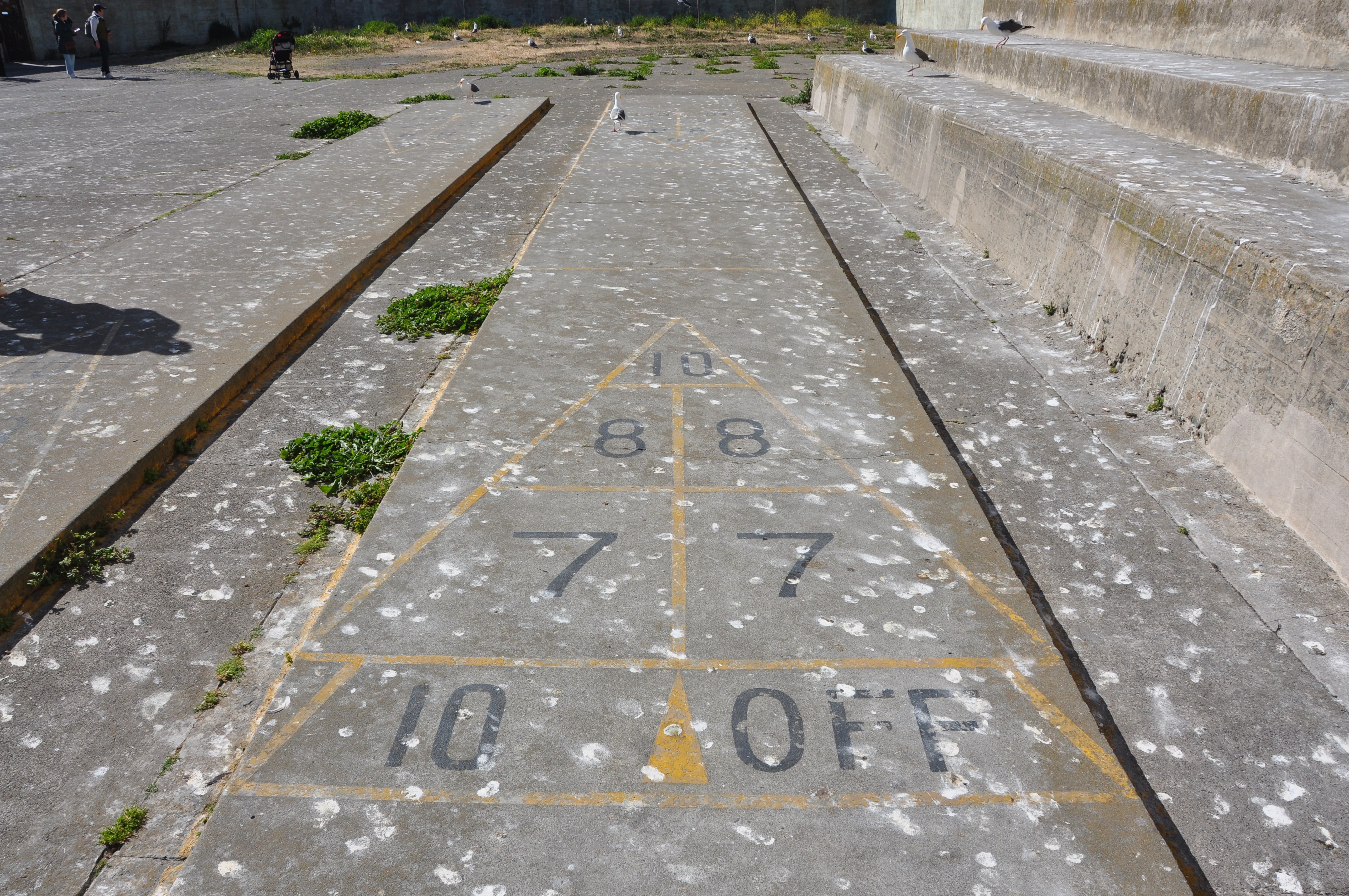
And there, almost absurdly, was a shuffleboard court.
I stopped and looked at it for a while.
There was something about that simple game inside a maximum-security prison that disturbed me more than some of the cells.
Men locked on an island in the middle of San Francisco Bay, sliding discs across painted lines on the ground.
A few feet of movement.
A small target.
Rules.
Boundaries.
Then start again.
Maybe that's what people do when they can't leave.
They invent smaller places where they can still move.
I took a photograph.
I don't know why, but I liked that shuffleboard court.
Maybe because it was ridiculous.
Maybe because it wasn't.
Then there was the escape.
June 1962. Frank Morris. John Anglin. Clarence Anglin.
Months of preparation hidden behind the walls of their cells. Enlarged ventilation openings. Dummy heads left in their beds. A raft and life jackets made from raincoats.
And then, one night, they disappeared into the Bay.
Nobody knows with absolute certainty what happened after that.
Maybe they drowned in the freezing water.
Maybe they made it.
Standing there, the second possibility was obviously the one I wanted to believe.
Not because it was more likely.
Because it was better.
Three men leaving one of the most famous prisons in America and disappearing into the darkness toward a city whose lights they had been watching for years.
No ending.
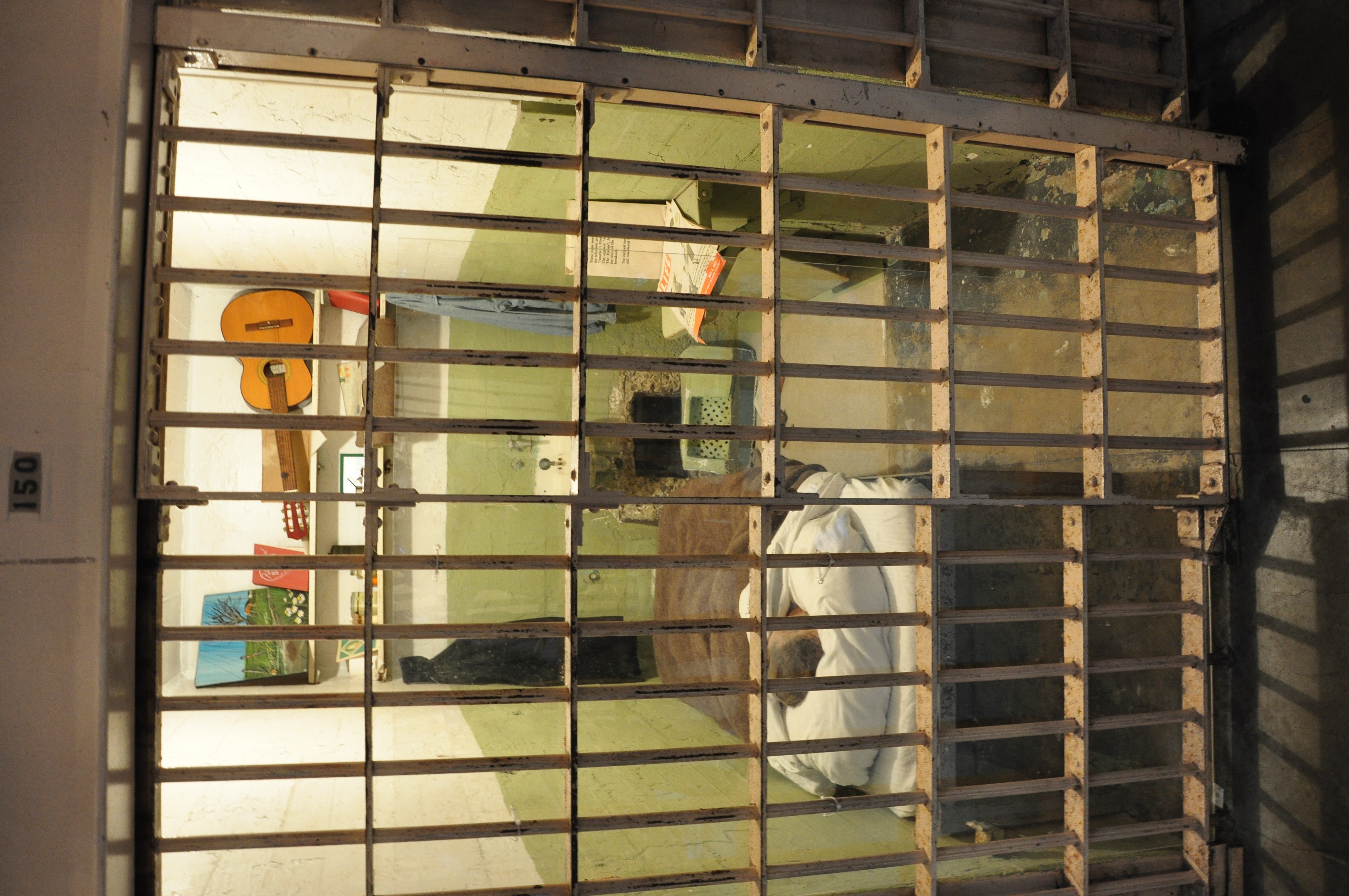
Just an escape.
I walked back toward the dock.
Behind me was the prison.
Across the water was San Francisco.
That idea stayed with me.
Being close to something and still unable to touch it.
The painted lines of a shuffleboard court.
Three men crawling through holes in their cell walls.
The lights on the other side of the Bay.
Months later, pieces of all that would begin finding their way into songs.
Not literally.
That's not how songs work.
Things stay somewhere inside you.
Then one night you pick up a guitar and discover they never really left.
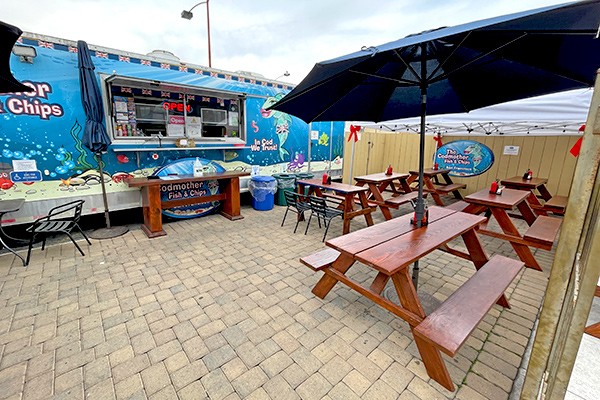
After Alcatraz I wandered around Fisherman’s Wharf, ate fish and chips at The Codmother and spent the rest of the evening walking without much purpose.
San Francisco was becoming less like a destination and more like a state of mind.
Water everywhere.
People leaving.
People arriving.
Things visible from the other side of the Bay.
Things you want but can't reach.
I wrote a few lines in my notebook.
Nothing that looked like a song.
Not yet.
MAY 19 — NORTH BEACH
North Beach.
Coit Tower.
Saints Peter and Paul Church.
Then City Lights.
I had wanted to see the bookstore because of Ferlinghetti and the Beats, but I stayed much longer than expected.
Books everywhere.
Poetry. Politics. Madness.
America arguing with itself on shelves.
I liked that.
Later I ended up in a small bar not far from Columbus Avenue.
That's where I met Diego Paul Sales.
Diego wasn't playing.
He was talking.
Or, more accurately, listening.
He had that strange habit of letting everyone else fill the silence before saying something himself.
We started talking about music.
Then literature.
Then San Francisco.
Then about why so many rock bands eventually become boring.
I said something about guitar riffs.
Diego shook his head.
“Everybody talks about guitars.”
He played bass.
For him the bass wasn't something underneath the song. It was another voice inside it.
“The bass has its own story.”
That got my attention.
We talked about records from the late sixties and early seventies, when rock could still be dirty, strange, melodic and dangerous at the same time.
Diego liked bass lines that moved independently from the guitars — something you could almost sing.
Something you could feel before you understood it.
Before leaving, he wrote an address on a piece of paper.
A rehearsal room.
“Tomorrow night. If you're around.”
I put the paper in my pocket.
MAY 20 — THE ROOM
During the day I wandered through the Mission.
Mission Dolores.
Murals.
Streets changing character every few blocks.
San Francisco seemed to have no interest in being one thing.
That evening I went to the address Diego had given me.
The place wasn't impressive.
A corridor.
A couple of doors.
Cables on the floor.
Old amplifiers.
The smell of dust, wood, beer and overheated electronics.
Jimmy was there.
That surprised me.
Diego apparently knew him.
Or perhaps San Francisco was simply smaller than it looked.
And behind the drums was a familiar face.
Joe Resnick. The man who had convinced me to come to San Francisco.
Joe didn't talk much.
He sat behind an acoustic kit that looked as though several generations of musicians had tried to destroy it.
Then he started playing.
Deep toms.
A dry snare.
No tricks.
No polished studio sound.
Just a heavy, physical pulse.
Joe didn't seem interested in keeping time for us.
He pushed the music.
When something became too comfortable, he'd move it somewhere else.
Jimmy plugged in his guitar.
Diego picked up the bass.
Someone handed me another guitar.
There was no plan.
We played.
Badly, at first.
A riff would appear and disappear.
Jimmy would stretch it, bend it, cover it in delay and then suddenly cut everything away.
Diego refused to follow either of us. His bass moved underneath the guitars like another melody.
Joe kept pushing from behind.
I tried to find somewhere inside all of that where my guitar could breathe.
At some point we stopped trying to play a song.
And that was when it became interesting.
There were maybe forty seconds — perhaps less — when the four instruments seemed to belong to the same place.
Nobody said anything afterward.
Jimmy lit a cigarette outside.
Joe drank some water.
Diego looked at me.
“That wasn't completely terrible.”
High praise.
MAY 21 — THE PACIFIC
My last full day.
I went west, toward the Presidio and the ocean.
San Francisco changes completely there.
The buildings disappear.
The wind gets stronger.
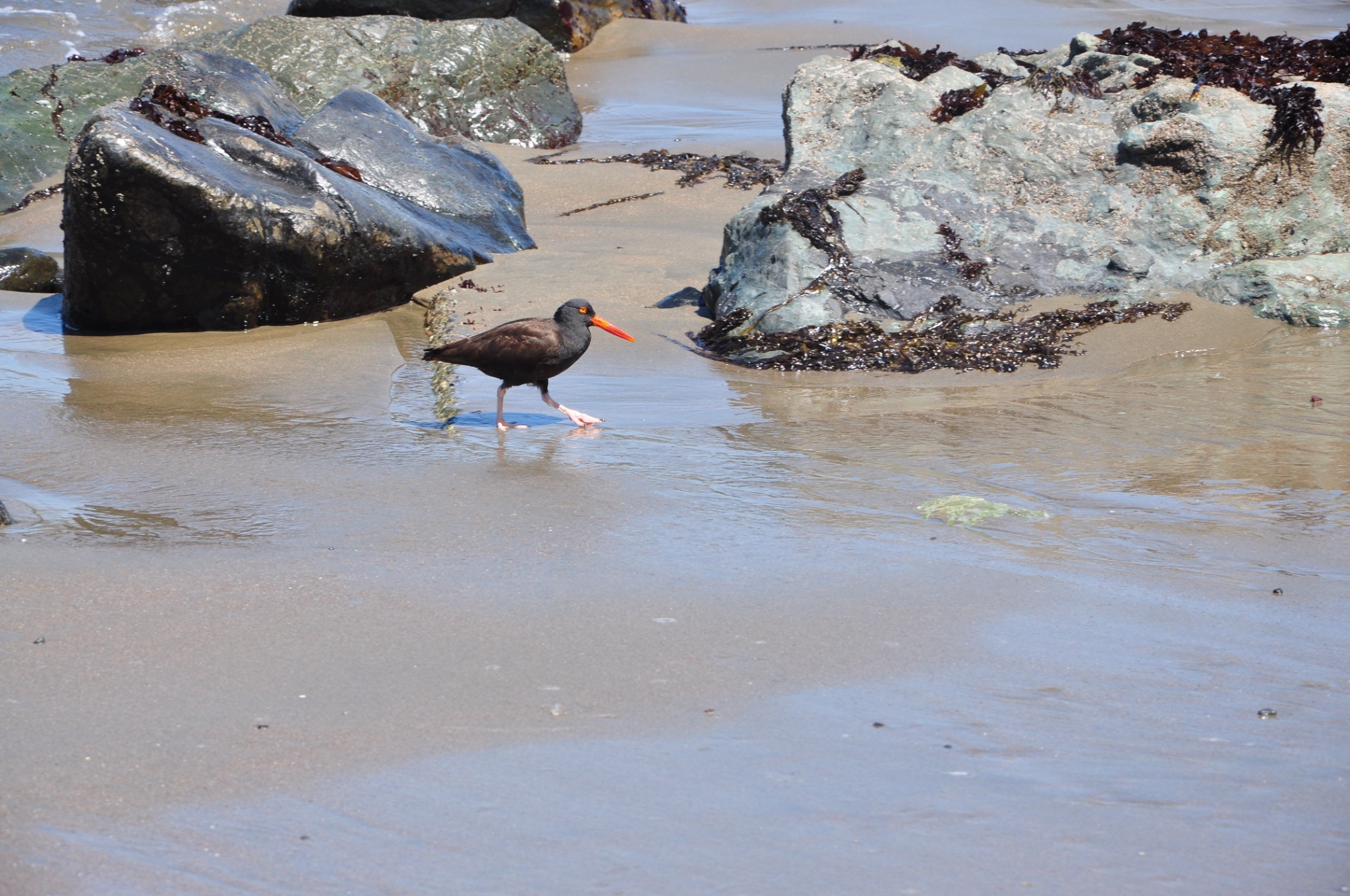
Birds. Sand. Rocks.
Cold Pacific water.
I walked for a long time.
I kept thinking about the rehearsal room.
Not because what we'd played was particularly good.
Most of it wasn't.
But there had been something underneath it.
Jimmy's guitar creating space and tension.
Diego's bass refusing to stay in the background.
Joe turning everything into movement.
And somewhere inside it, the beginning of something I couldn't name.
Something unfinished.
Something I wanted to hear again.
That evening we met one more time.
No songs.
No band name.
No plans.
Just fragments.
A bass line.
A drum pattern.
A guitar phrase.
A few words written in a notebook.
We recorded some of it badly.
Then we went out for a beer.
I don't remember anybody saying we should start a band.
I'm almost certain nobody did.
MAY 22 — LEAVING
I checked out in the morning and headed for the airport.
On the flight home I went through the photographs from the week.
The Embarcadero.
Golden Gate.
Sausalito.
Alcatraz.
North Beach.
City Lights.
The Mission.
The Pacific.
But I kept returning to one terrible phone recording from that rehearsal room.
Four people playing something that didn't have a name.
I listened to it again.
And again.
There was a sound buried in there.
Not a band yet.
Certainly not the Volcren.
But something had begun.
Over the following months, files crossed the Atlantic.
Riffs were changed, destroyed and rebuilt.
Lyrics appeared.
Recordings accumulated.
Arguments started.
Some ideas disappeared.
Others refused to die.
Slowly, a language emerged.
Jimmy brought the scars and the space.
Diego made the bass another voice.
Joe gave the songs a body and kept them moving.
And I brought the words, the unfinished stories and whatever I was trying to get out of my head.
Eventually those four people became Paul Littlestripes, Jimmy Ache, Diego Paul Sales and Joe Resnick.
And somewhere along the way, that nameless sound acquired a name.
Volcren.
What began as fragments became songs.
The songs became Shadows & Reveries.
Then came other records, other stories, other roads.
And eventually there was the Archemondo — our name for that strange territory where places become memories, memories become characters, desire turns into landscape and the outside world starts looking suspiciously like the inside of your own head.
Looking back, maybe San Francisco was already part of it.
The asphalt.
The Pacific.
The prison across the water.
The bridge disappearing into the fog.
The streets.
The people I met by accident.
People sometimes ask when the Volcren started.
There are several possible answers.
The first finished song.
The first recording.
The moment we chose the name.
But I prefer another one.
San Francisco.
May 2025.
A half-open door.
A guitar playing somewhere inside.
And me stopping to listen.